

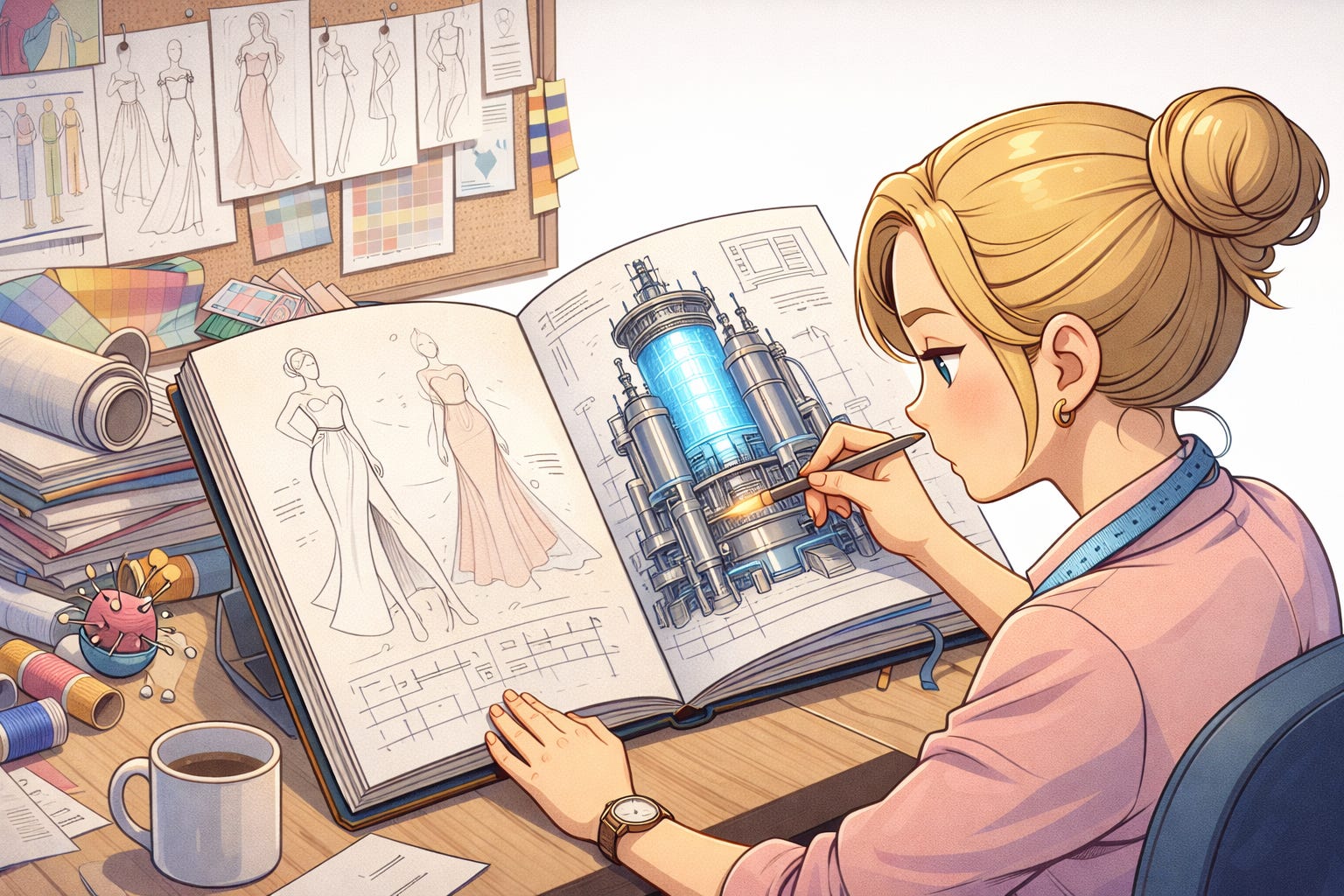
Is AI intelligent? The question that everyone's obsessed with obscures a more important one: how do we create novel things with AI?
LLMs are information compression machines. They’re remarkably bad at novel thought, and their “reasoning” capabilities are more about introducing reflection points to enhance compression accuracy and depth. They’re terrible at operating from first principles and their responses, even when not openly sycophantic (“great insight!”), are dominated by whatever context you provide them in a prompt. But they’re incredible editors, encyclopedists, auditors, and so forth—they answer any question that has a right answer (usually correctly) and they easily identify gaps in well-known patterns.
LLMs also combine what’s known in ways that dazzle us, like a kaleidoscope. Websites that took weeks or months for a senior developer like myself to create can be spun up in less than a day. We’re so amazed that we don’t realize that this ability, too, is information compression, leveraging well-known patterns to create things that are new but not novel.
What makes something novel? I think it’s almost mystical. The scientist who discovers a new law in the natural world or the entrepreneur who creates an iPhone cross a threshold that’s hard to define but that we all recognize. They spend years compressing information in school and at work, learning through study and experience just to approach the threshold where they can ask a single novel question, one that might change the world.
In the age of AI, when information compression becomes free, instant, and reliable, the most vital skill will be knowing how to ask novel framing questions. I’m not talking about prompt engineering, or the important skill of knowing which questions to ask the compression machine. The bigger skill is knowing how to frame novel work.
What if expertise were free?
Imagine a fashion designer who wants to design a new nuclear reactor. Right now, they would need to go back to school for nuclear engineering, spend years working for others, and get licensed, all so that they could maybe get the chance to create a new design.
Once the fashion designer gets that chance, there’s some set of novel questions they or anyone designing a new nuclear reactor has to ask in order to create a truly groundbreaking design. Not everyone who’s in a position to create something truly new is good at it. In particular, those who are good at asking novel questions are usually the ones who eventually create novel things.
I posit that this ability to ask novel questions can be independent of your occupation (more on this later). The fashion designer might be just as good at asking novel questions as a nuclear engineer. No matter how skilled you are at asking them, however, you have to know a lot about a field just to get to the point where you can ask a meaningfully novel question to advance it. But if AI can quickly, cheaply, and perfectly compress all the info we need to get started, we can begin to see how the fashion designer whose real skill is novel question-asking could one day skip ahead and start designing a nuclear reactor right away.
The compression and novelty thresholds
Easier said than done. LLMs’ compression abilities are far from perfect right now. They can compress the lower layers of a given field’s knowledge pyramid—laws of physics, basic material properties—almost perfectly, but as you move up, the compression gets lossier and lossier.
For every field, there’s a compression threshold, which roughly marks the point at which LLMs stop effectively reproducing what’s already known, and the novelty threshold, which indicates where we cross over into the unknown. The shrinking gap between these two thresholds is where human information compression is needed—we call this “expertise.”
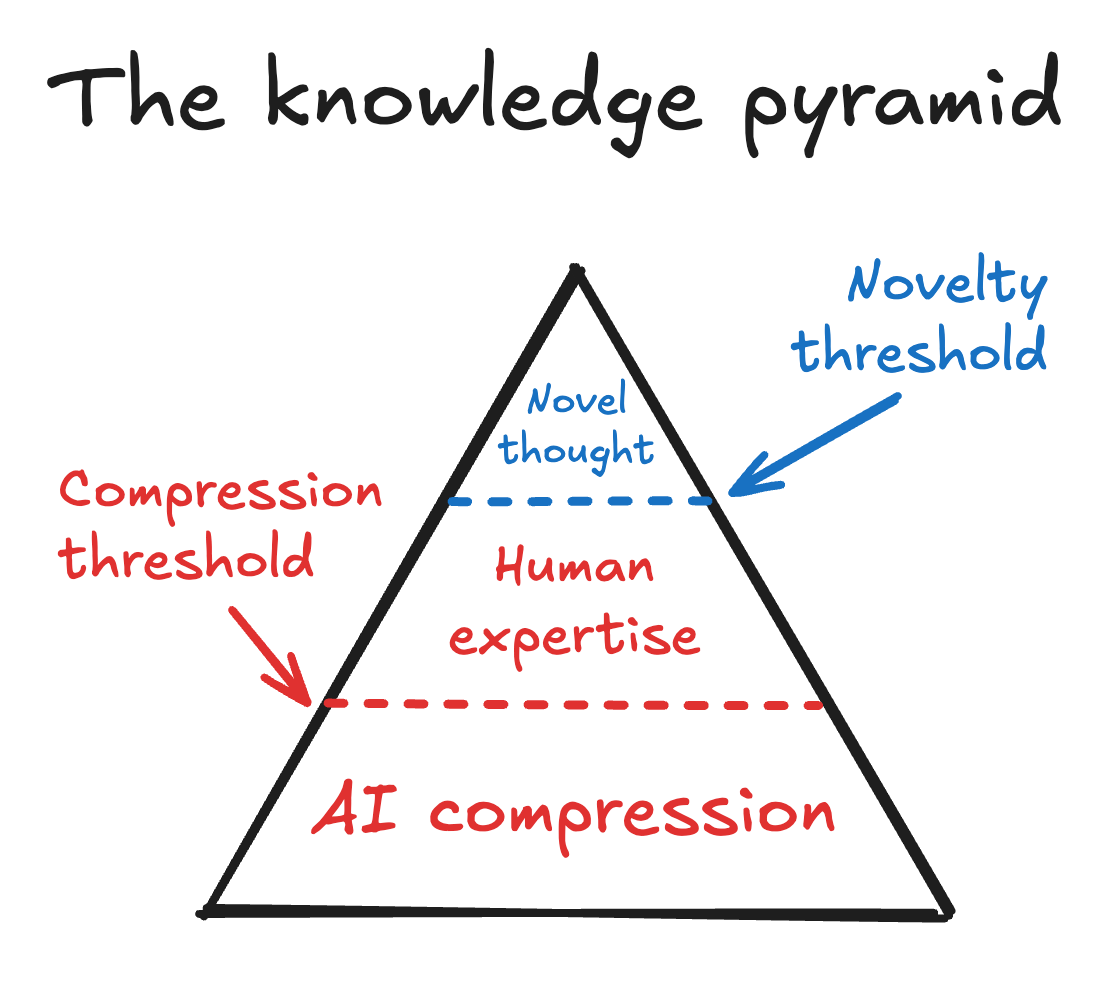
In some fields, like web development, the gap is almost non-existent. Almost any non-expert can create a high-quality and novel app or website today using Lovable or its competitors.
In other areas, however, the gap is still significant. When I tell my handyman that I’m tired of cockroaches bothering guests in my casita, he’s able to stand in the backyard and rattle off a vision for an entire hour for an integrated approach involving roofing, horticulture and architecture that’s infinitely more creative than anything an LLM can come up with. In law, medicine, and countless other fields—including nuclear engineering—the gap is shrinking but still meaningful. So our proverbial fashion designer probably couldn’t design a novel nuclear reactor today—eventually, however, I bet that they would.
“But information compression is part of novel thought. You can’t separate the two,” one might object. For instance, when I was in grad school for history, we memorized dates of events and the lengths of ancient Roman roads not for trivia’s sake but because knowing them spontaneously triggered new connections and made us better historians. Information compression and novel thought support one another inside of the brain.
But therein lies the skill, no? Somewhere out there, there are people who can do something that most of us would consider unnatural, to externalize that compression and still ask good questions.
Socrates, famously illiterate, decried the invention of writing because he thought that people would become stupid if they could outsource their memories. He saw intelligence and internal information compression as one and the same. He didn’t foresee that literacy would open up new modes of thought, something to which anyone who reads a book can attest.
The rise of the questioners
Who are those people, the ones who are good at combining AI information compression with novel questions?
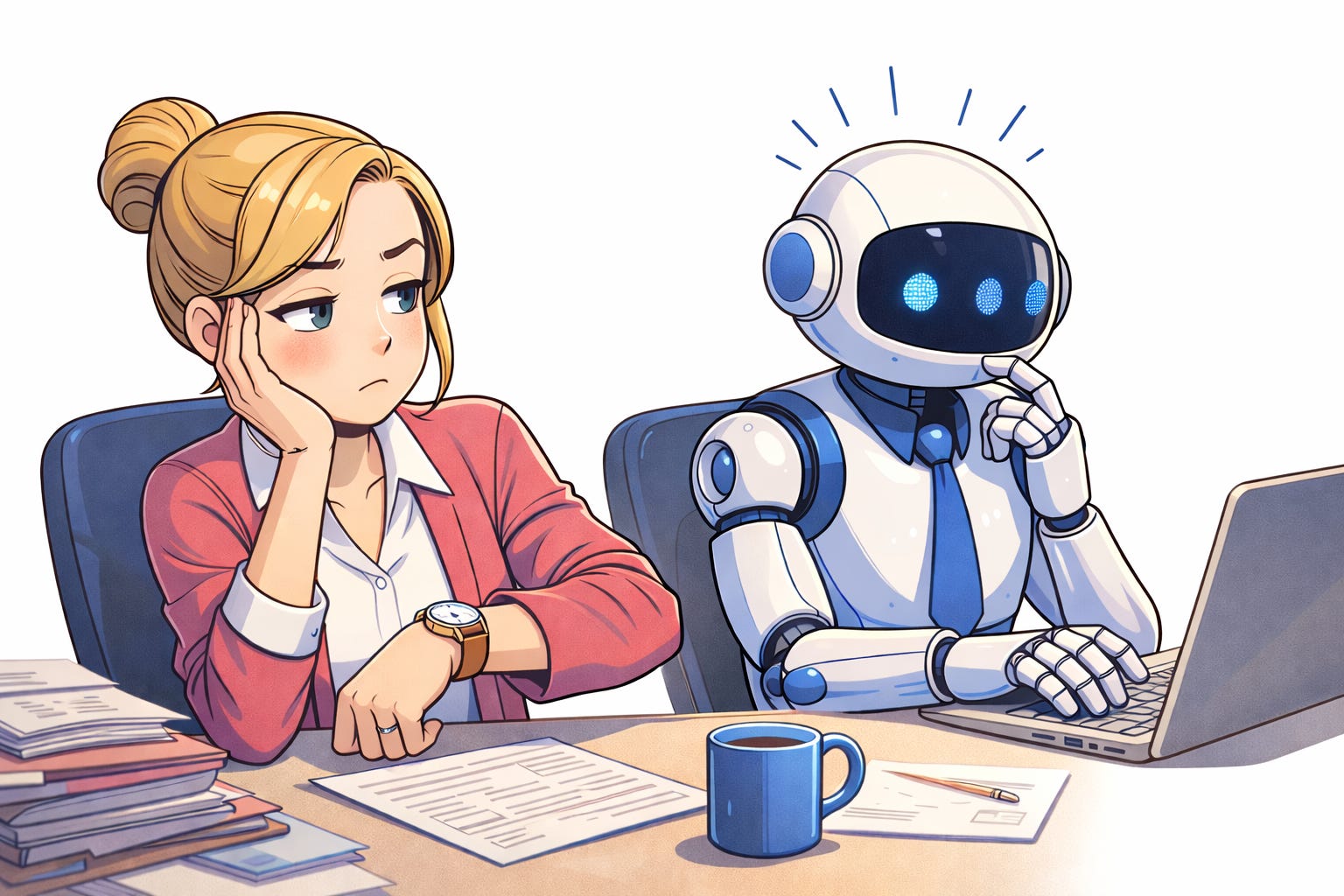
They’re out there today, quietly working their jobs, tinkering with AI, already doing what I’ve described perhaps without knowing it. Consider the executive assistant who had to step in for a CFO who suddenly quit and is doing a weirdly good job, or a ChatGPT-wielding nurse who’s maybe overstepping their authority a little but has improved outcomes. Maybe they’re afraid of AI—they shouldn’t be. They should be impatiently waiting for AI to catch up to them.
Why should skilled questioners be restricted to one trade? If the cost of reaching a field’s novelty threshold is effectively zero, you could jump from field to field, synthesizing your learnings and experience to keep asking even better questions. Occupations that require credentials and licenses will be off-limits for a while—another reason why nuclear engineering is out of reach—but everything else is fair game.
Why aren’t people trying to become better at asking novel questions? Inertia is a big reason. The overwhelming majority of intellectual labor is information compression. We’re bad at it, yet it’s also comfortable; and that combination is what has historically provided the pleasant economic moat that we call middle class life. Our instinct is to cling to that moat rather than storm over and out of it.
Novelty is also hard. It makes our squishy brains hurt and there are few external incentives. Our education system at best rewards critical thinking, which improves compression outcomes. Our workplaces are a similar story, and commercial success depends more on execution over originality. We’re rarely rewarded in life for true, genuine creativity.
Crossing the threshold over and over
I’m cautiously optimistic that we could create a new economy based on the broad swathe of humanity asking novel questions. As long as there’s a novelty threshold to be crossed—and I don’t see any reason why there wouldn’t be—there will be demand for agents—currently humans—to cross it. The more we discover, the longer the threshold becomes with more opportunities to cross it again and again.
The idea that we might all become novel-question-askers only sounds insane today because of how painfully expensive it’s been to reach the novelty threshold. We’ve organized our entire identities around the friction of gaining enough knowledge to become a master plumber or a partner at a law firm. But as the compression threshold catches up and the gap between AI compression and novelty shrinks, that ego grip will have to loosen.
I recognize that I’m not as good at asking novel questions as I was at being a web development expert, but I think I’m getting better, and I’d especially like to learn from those who are doing it well. I’d like to create wonderful and weird things together.