

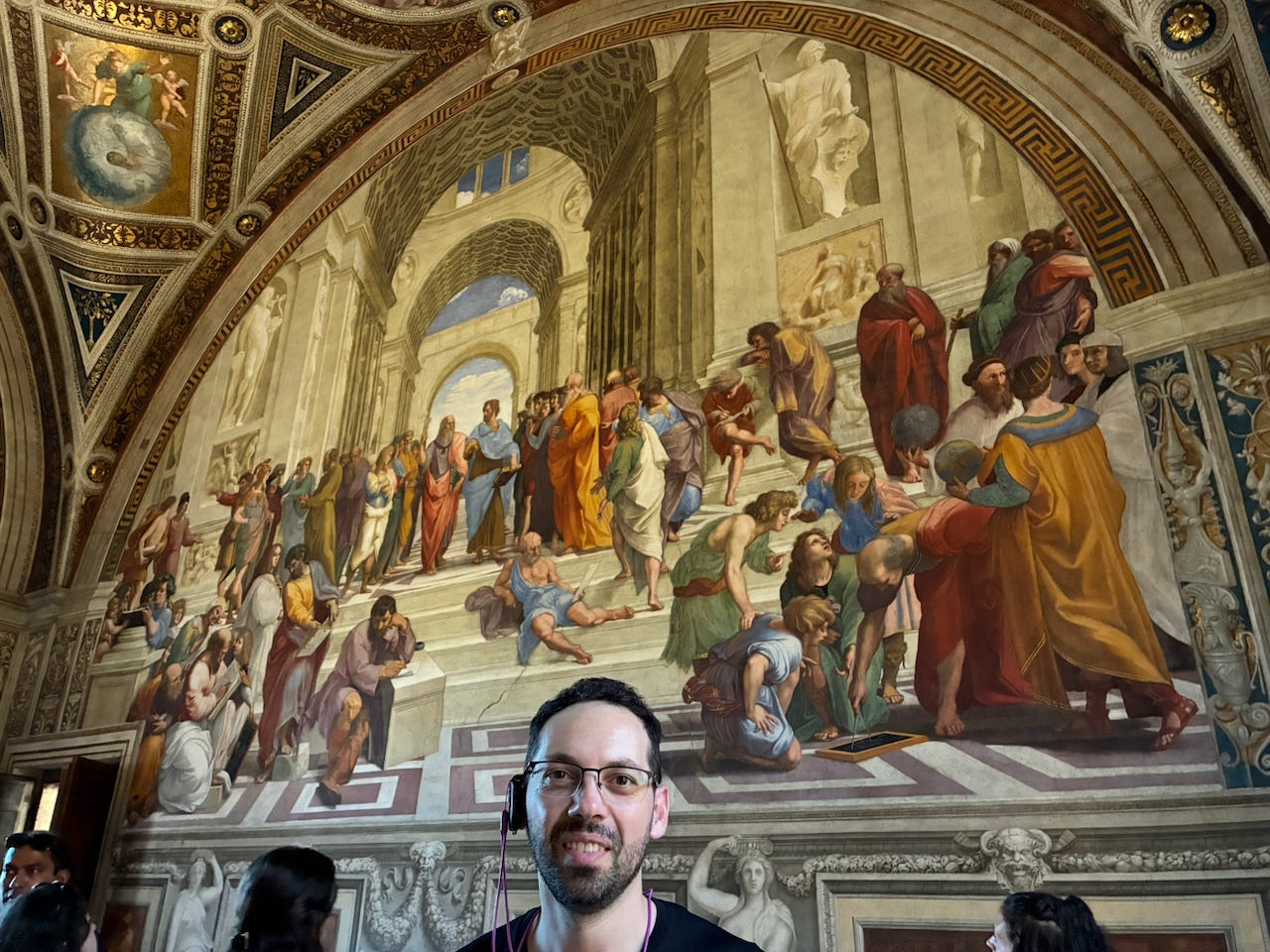
Last night, I looked up my former teacher’s dissertation.
My teacher, Tom Dechand, was a teaching assistant for an undergraduate humanities seminar that I attended 2008-2009. The seminar was held by the late and legendary Dr. Richard Macksey. You don’t know his name but your world has been shaped by this man.
In 1966, Dr. Macksey organized a symposium at his Baltimore mansion near Johns Hopkins University’s campus where he taught comparative literature and writing for close to 60 years. He invited a few French names that, if you’ve studied postmodernism, you might find familiar: Jacques Derrida, Jacques Lacan, Roland Barthes, and Gilles Deleuze, among others.
Dr. Macksey’s symposium is why we know these names in the Anglophone world; he was the midwife of postmodern thought. All of the past 60 years of deconstructionism and critical theory, its triumphs and its abuses, initially passed through this gate:

What you’re looking at is Dr. Macksey’s home library, or more accurately maybe about 20% of it. I know that it’s hard to believe, but trust me, the man read every single book you see. This room is where he hosted his 1966 symposium and nearly every class he ever taught. It’s this room where I found myself in as an undergraduate, overawed by the book collection and the towering intellect of the man who owned it.
I remember one time talking with Dr. Macksey after class about an obscure thirteenth-century astronomical text that was the focus of my thesis when he asked me to wait a minute. He left and returned with a copy of the same text. It just happened to be in his collection, replete with notes scribbled in the margins from many years ago. He opened to the same page that I had been referencing and started reading from it, fluently and casually in medieval Latin, as if it were nothing. Nearly every one of his students has a similar story of his intelligence and the generosity that matched it.
By the time I met Dr. Macksey, he was close to retirement and visibly in poor health. He nominally taught the seminar, but actually his graduate student Tom ran the show.
In that seminar, us undergraduates were willing guinea pigs for Tom’s dissertation research, which was on the English poet Samuel Taylor Coleridge, a name that evokes pipe smoke-filled parlors like Dr. Macksey’s. But Coleridge was much more than a stuffy old poet, he was one of the leading intellects of 18th century Europe, a tour de force whose influence on science, politics, religion, critical theory, and many other fields can be felt even today.
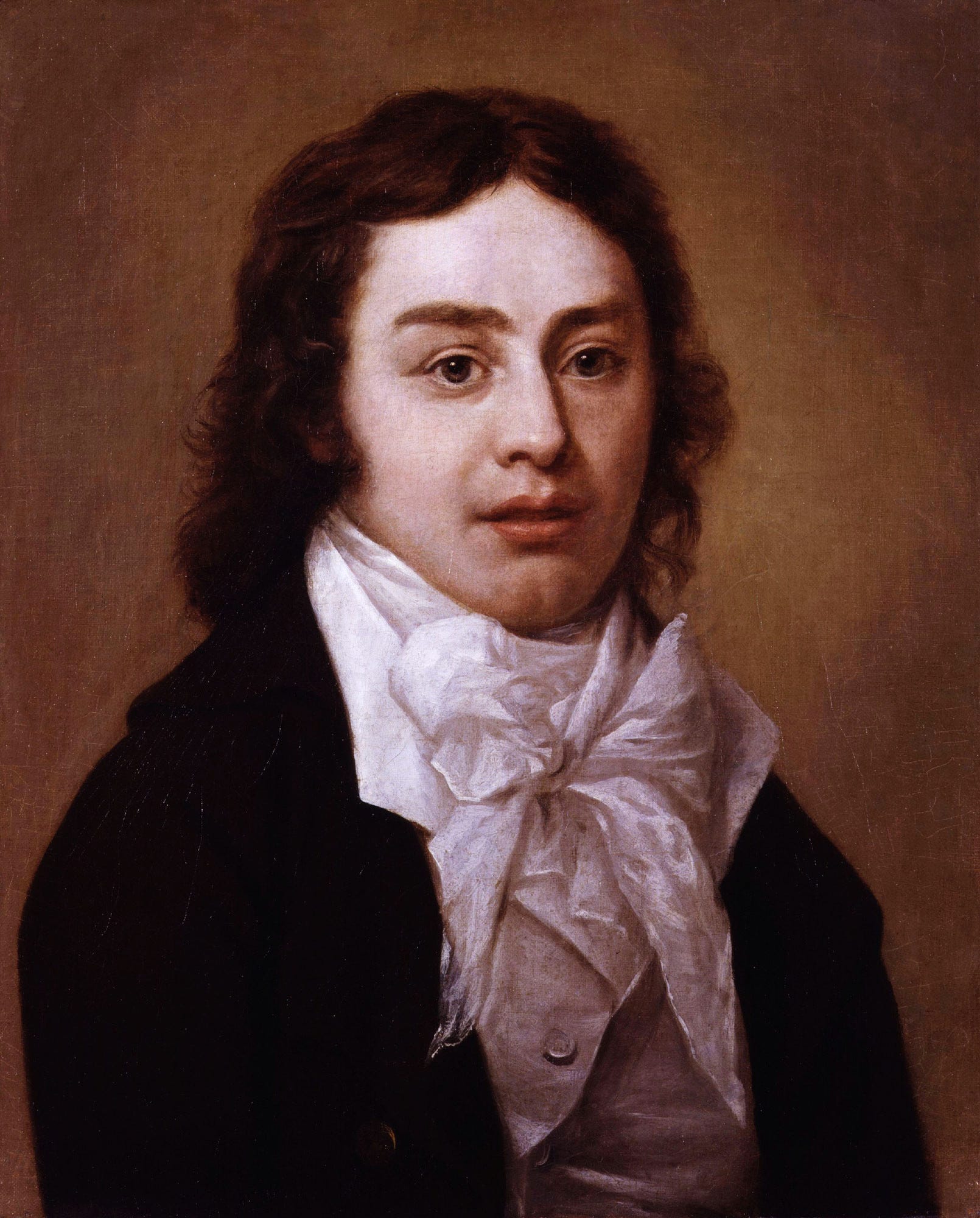

At the highest level, Coleridge believed that ideas had a life of their own and that two seemingly unrelated ideas—say, from different fields—may actually share the same structure.
Take, for instance, biological immunity and Karl Popper’s paradox of tolerance in liberal democracies. They seem unrelated at first, but both are about systems (living beings and societies) that are open (ingest food and tolerate free speech) and yet must defend against intrusion (antibodies and political/security control). The threat in such selectively open systems is that the defense mechanism will attack its host (autoimmune disorders and authoritarianism), yet host needs the defense to thrive.
One isn’t an analogy for the other; understanding biological immunity as “like” liberal democratic tolerance or vice versa doesn’t help you understand either idea better. It’s deeper than that: both are basically variants of the same meta-idea. Coleridge called this tautegorical thinking, and it’s a way of understanding the history of every idea, from poetry to penance, from economics to eclairs.
Behind Coleridge is an even more potent idea, that ideas are formed by hidden structures that can be understood, a concept that underpins deconstructionist discourse. But unlike our media—whether it’s critical theory, social media, or the news—that dissects every idea into race, class, gender, or whatever category du jour, Tom and Dr. Macksey taught us the radical thought that we should seek what unites them.
That unifying spirit came naturally to all of us. For instance, while I was studying thirteenth-century Latin manuscripts for my thesis, I was also writing code and studying operating system architecture. People marvel that, after quitting my medieval history PhD, I switched into software engineering. But no one in that seminar would find that unusual; Tom switched from physics to the humanities, and Dr. Macksey originally studied medicine. As the Roman playwright Terence once wrote, homo sum, humani nil a me alienum puto: I am human, nothing that is human is alien to me.
Now imagine yourself sitting in that seminar at 20 years old taking this all in. Tom leads with Socratic dialogue through heady waters. Dr. Macksey occasionally takes the pipe out of his mouth to pierce the air with anecdotes about Picasso or biomechanics—or sometimes South Park (he was obsessed). The rest of us, hormonal undergrads huddled under towers of ancient tomes like a scene out of Harry Potter, were at the feet of the masters, deep in thought.
We weren’t just learning. We were being initiated.
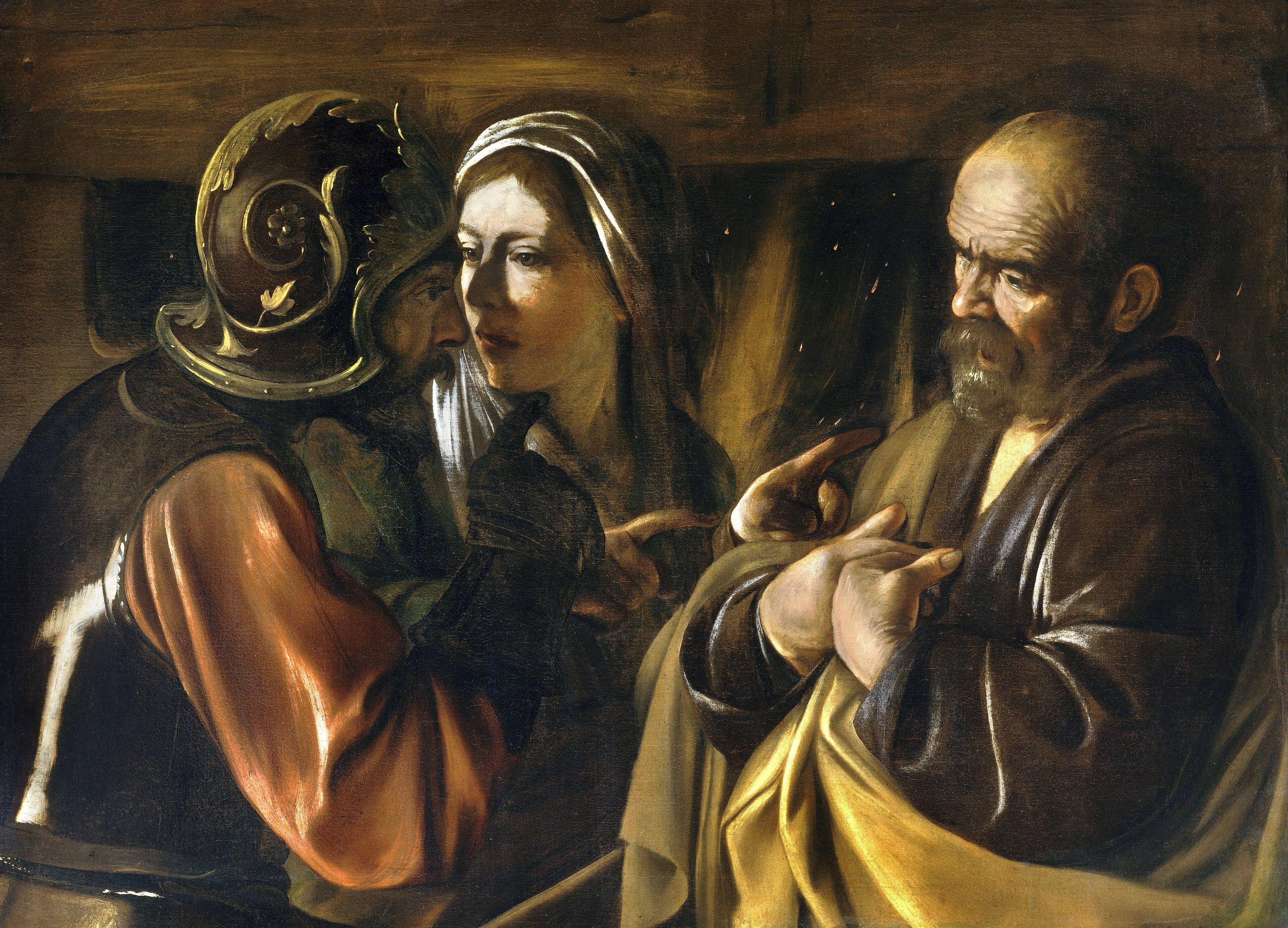
#/media/File:The_Denial_of_Saint_Peter-Caravaggio_(1610).jpg)
Chekhov wrote a short story called The Student about a young seminarian who encounters two villagers, a mother and daughter, while walking back home on a cold Russian winter evening. He stops by their fire and recounts the Biblical story of how Peter denied knowing Jesus. The mother and daughter are both visibly shaken but don’t say why.
The seminarian bids them adieu, and as the villagers recede into the distance, contemplating their mysterious reaction, he realizes:
“The past…is linked with the present by an unbroken chain of events flowing one out of another.” And it seemed to him that he had just seen both ends of that chain; that when he touched one end the other quivered.
To be in Dr. Macksey and Tom’s seminar was to touch an unbroken chain of ideas and see it quiver. We held the chain. We even aspired to add a link.
Yes, we met inside of a fancy Hogwarts room, but it was never about the library or the pipe smoke. It was about the community of moths who were attracted to the same flame. We were shared a love of the idea behind Idea, whatever its name—Coleridge’s “tautegorical thinking,” Chekhov’s “unbroken chain.” Dare I suggest it: perhaps humanity itself.
It’s easy to get caught up in Coleridge, Chekhov, and Dr. Macksey. They’re larger than life figures.
Quietly, though, Tom was the one who went on long walks with us to discuss our research and share his innermost thoughts. He would take us to the restaurant on campus where his wife was a chef experimenting with locally grown ingredients. He invited his former undergraduate advisor to Baltimore, who later became one of his dissertation supervisors, to speak with us and share his work. Tom spoke with equal passion about the Colorado Rockies as he did about Plato’s Phaedrus, his impatience with the shallow takes of authors we read and his delight in reading texts closely.
I picked up Tom’s dissertation last night trying to remember those ideas that quivered years ago. What struck me more than the ideas was how he brought everyone around him into the intimate recesses of his intellectual life with curiosity and without judgement.1 It was his love of ideas and people, like Dr. Macksey’s, that wove us into a school of thought. Without that love, the unbroken chain that connects us all lies motionless.
Even in the introduction to his dissertation, which was finished years after I graduated, he credited me by name along with other undergraduates from the seminar. I had no idea until last night.
Richard Macksey was my teacher and friend of forty years. Your essay brought back wonderful memories of pipe smoke and lemon cookies and chitchatting until 3 AM (when he was still vigorous and I was flagging).